Manufacturing
Company Uniform Programme
Company uniform programmes managed end to end: one garment list per role, sealed samples, per-site packing, and re-orders that match the first delivery.
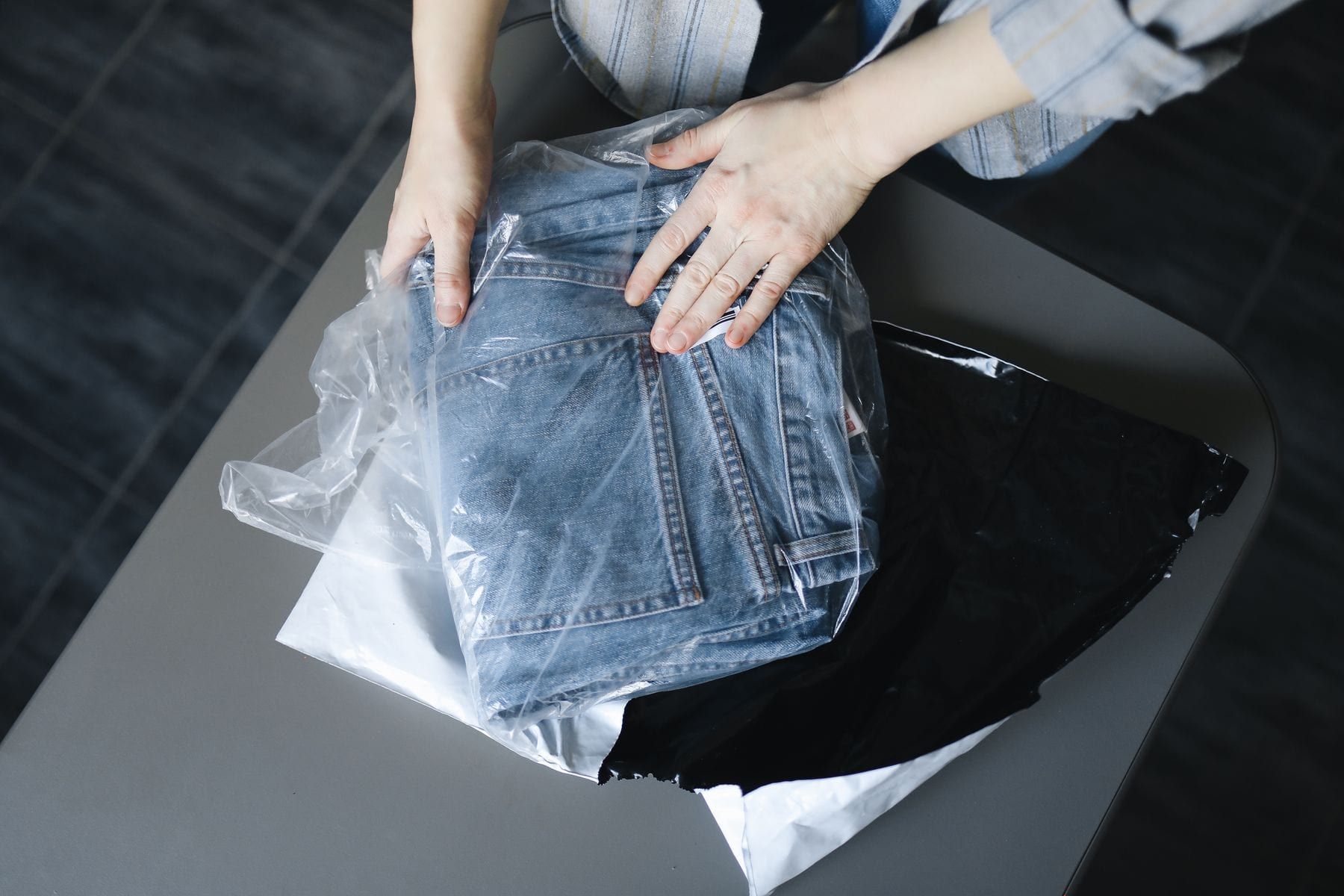
- A sealed pre-production sample per garment is held by us and by you, and every re-order is measured against it
- Patterns, lab dips, size charts and digitised logo files are retained for the life of the programme
- Cartons are packed per employee, per department or per site, with the packing list inside each box
- Franchisees and branches order against the sealed standard — they choose quantities, never variants
A uniform programme is the difference between buying company uniforms once and being able to re-order them for years. The garment list, sealed samples, size charts, lab dips and decoration files are recorded once and held permanently, so the hundredth order matches the first. Whether you call it a uniform programme or a uniform program, our job is to keep those records straight; yours is to make the decisions they encode.
One garment list per role
A whole-company range is built per role, not per department name: who faces clients, who sits at a desk, who moves between office and site. Each role gets the fewest garments that do the job, because every additional pattern adds grading and cost to every future re-order. Men’s and women’s versions are drafted from separate blocks, and the whole list is dyed to one standard so pieces sit together. The garments sit on the corporate uniforms page.
Group and multi-site governance
Group programmes — hotel groups, restaurant chains, retail estates — work as a firm centre with a flexible edge. Blocks, cloths, lab dips and size charts are agreed once at group level and sealed; each property, outlet or branch keeps its identity in a reserved accessory colour, site-specific labels and per-site packing. Franchisees and branch managers order directly against the sealed file — they choose quantities, never variants — which is what stops local buying drifting off-brand. Rollout is piloted at one or two sites before the estate follows, so a fit problem is discovered once, not forty times. Category detail sits on the hotel, restaurant and retail uniform pages.
Re-orders and new-hire top-ups
The re-order is designed at the first order. Because the sealed samples, size charts, lab dips and embroidery files are retained, a top-up is a short message — styles, sizes, quantities, names — not a new project. Every repeat is measured against the sealed sample rather than the last shipment, and new dye lots are checked against the retained dip before cutting. Named garments for new starters reuse the recorded naming standard, so a new joiner’s kit matches the original issue. Small runs cost more per piece, so most buyers batch top-ups or keep a buffer of common sizes. Schools run the same system on an annual rhythm — see school uniforms — and the highest-churn categories, chef uniforms and housekeeping uniforms, are where retained records earn their keep fastest. If your programme was made elsewhere, a current garment is usually enough to rebuild and seal the standard.
Department colour coding
Colour coding succeeds when it is boring: one garment, a few colourways, each identical every time it is ordered. The coding method follows reading distance — full garment colour or a large accessory reads across a lobby or shop floor, while contrast collars and plackets work at conversation distance and are cheaper to maintain. Keep the palette small: every colourway is a lab dip and a retained swatch to be held forever, dipped separately on every fabric and approved under the lighting it will be seen in.
Openings and rollouts
A new opening has a fixed date and a team that is not fully hired yet. The range plan comes from the staffing chart, designs are sampled and sealed early, and the bulk order runs on a planned size curve per department, refined as contracts are signed. Deliveries are packed per department or per store and staged to the training calendar, with a buffer in the middle sizes for opening-week attrition; anything unworn feeds the new-hire stock after opening. The one rule that matters: uniforms enter the plan at lease-signing, not at fit-out.
Who owns the records
You own every decision; we own the records that make those decisions repeatable, and the documentation is shared so you are never locked in. When the person who ran the rollout moves on — and in a multi-year programme, they do — their successor inherits a working system rather than a mystery of unlabelled cartons. Minimum order typically starts at 100 pcs per style; exact MOQ is quoted per project, with the whole programme priced as one job. The mechanics sit under sample development, quality control and labels and packaging.
§ 01When Buyers Need This
Situations this service answers
If none of these describe your project, this probably is not the step you need — tell us what you are actually trying to solve.
- You are putting a whole company into business uniforms for the first time and need the programme managed, not just the garments made
- You run a hotel group, restaurant chain or retail estate where every site must wear the same standard
- Branches or franchisees currently buy locally and the brand has drifted into several shades of the same navy
- Staff turnover creates a steady stream of new-hire top-ups that must match what the team already wears
- You are opening new sites on fixed dates and need opening kits packed per location ahead of launch
- You inherited a programme from another supplier and want the standard documented before re-ordering
§ 02Our Process
How this step runs
- 01
Programme brief
Roles are mapped to garments, the men's and women's policy is agreed, and the budget-critical choices — fabric, colour, decoration — are fixed.
- 02
Sampling and fit
Fit samples across the size range are tried on real staff; the size breakdown is set from the results, not from a generic chart.
- 03
Sealing the standard
A pre-production sample per garment is approved, sealed and held by both sides, with lab dips and decoration files recorded alongside it.
- 04
Rollout and issue
Bulk runs against the sealed samples; cartons are packed to your issue list per site, department or employee, so distribution takes hours, not days.
- 05
Re-order rhythm
New starters and replacements are cut against the sealed sample — a production slot, not a new sampling cycle.
- 06
Review and revision
Wear reports and size data feed the next run; any change is sampled, sealed and dated as a revised standard rather than quietly mixed in.
§ 03What We Need From You
Inputs required
The faster these arrive, the fewer rounds development takes.
- The garment list per role, with headcounts per site or department
- Vector logo files, and brand colours as Pantone references or physical swatches
- Staff size data, or access to employees for a fit session before the size breakdown is set
- The site list with delivery addresses where packing is per location
- Who launders the garments and how, so cloth and care labels match reality
- One named owner for the standard on your side, who approves every change
§ 04Options
Choices available
- One common range, or tiered ranges where a flagship site or client-facing role carries extra pieces
- Department colour coding by full garment colour, trim or accessories
- Per-employee packing with name and size labels, or bulk packing per site
- Franchisee or branch ordering directly against the sealed programme file
- Fabric reserved from the first run where steady top-up demand is expected
- New-site opening kits produced and packed as one consignment per location
§ 05Limitations
What this cannot do
Constraints stated up front are cheaper for both of us than constraints discovered in production.
LimitationsWhat this cannot do
- 01Small re-orders carry the economics of small runs: set-up costs are fixed, so a handful of pieces costs more per piece, and most buyers batch top-ups monthly or quarterly
- 02Programme scope creep is the main risk — every extra garment or colourway is a standard to maintain forever, and we push back at the brief stage
- 03A programme keeps garments consistent; it does not redesign them, so a mid-programme change goes through a sampling revision for that style only
- 04We do not produce certified protective clothing such as EN ISO 20471 hi-vis or flame-retardant garments
- 05Where a mill discontinues a cloth, the nearest equivalent is sampled and approved with you, never substituted silently
§ 06Quality
How it gets verified
- Every re-order lot is measured against the sealed sample, never against the previous shipment
- New dye lots are checked against the retained lab dip and a swatch from the previous run before cutting
- Embroidery runs from the retained digitised file at the recorded placement on every garment type
- Size charts are set from laundered samples, so re-orders fit like the garments already in service
- Final inspection covers per-site and per-employee packing lists, not only sewing
Step 11 of 13
Where this sits in production
Every order runs through the same sequence. Each step has its own page, its own approval, and its own way of going wrong.
- 01Private Label Uniforms
- 02OEM / ODM Uniform Manufacturing
- 03Sample Development
- 04Fabric Sourcing
- 05Pattern Making & Fit
- 06Size Grading
- 07Logo Embroidery & Printing
- 08Labels, Name Badges & Packaging
- 09Bulk Production
- 10Quality Control
- 11Uniform Programme Management
- 12Uniform Design
- 13Plus Size & Extended Size Uniforms
← Before this
Quality Control
Uniform quality control from fabric inspection through in-line checks, measurement against spec, embroidery placement tolerance and final random inspection.
After this →
Uniform Design
Custom uniform design from your brand guidelines: garments, colours and working details turned into a sampled, sealed range ready for production.
Related Uniforms
Products this applies to
Related Fabrics
Fabrics this affects
§ 08FAQ
Uniform Programme Management — common questions
Frequently asked18 Q
What is your minimum order quantity for custom uniforms?
Minimum order starts at 100 pcs per style; exact MOQ is quoted per project. The figure depends on the fabric, colour and level of customisation involved, so send us the style, quantity and branding you have in mind and we will confirm the MOQ in the quotation.
How does the sampling process work before bulk production?
We start from your tech pack, reference garment or a brief, then make a pre-production sample in the agreed fabric and colour with your logo applied. You review the sample, we revise it if needed, and once approved it is sealed as the reference for bulk production. Where a fabric or finish is new to your project, we wash-test the sample before sending it so you see how it behaves after laundering.
How long does bulk production take?
Bulk production typically takes 25–30 days after the sample is approved and the order is confirmed. The exact schedule depends on fabric availability, order quantity and the amount of embroidery or printing per garment, and is confirmed in the quotation; we update you at fabric arrival, cutting and final inspection.
Do you make hi-vis, flame-retardant or certified protective clothing?
No. We do not manufacture certified PPE such as EN ISO 20471 hi-vis, flame-retardant, arc-flash or NFPA/ANSI-rated garments. What we do make is everyday workwear and uniforms, including corporate, hotel, restaurant, chef, housekeeping, retail and school uniforms, all with your branding applied.
Can we mix sizes and colours within the minimum order?
Mixing sizes within one style is normal and does not affect the MOQ. Mixing colours is usually possible too, but each colour needs its own fabric lot, so the per-colour quantity may be subject to a minimum. Minimum order starts at 100 pcs per style; exact MOQ is quoted per project, including any per-colour split.
How much does a sample cost and how long does it take?
Sampling typically takes 7–15 days once the fabric, logo and fit details are agreed. Sample cost is quoted per project, as it depends on whether the fabric is in stock, how many logo positions are involved and how many styles you need. Sample charges are commonly offset against the bulk order once it is confirmed, and this is stated in the quotation.
Can you embroider individual staff names or add name badges?
Yes. We can embroider each employee's name directly on the garment from a list you supply, or add a badge holder, Velcro patch or removable name tag if staff change frequently. Per-name embroidery is priced per garment and needs the final name list before production starts, so it is confirmed in the quotation.
Can uniforms be colour-coded by department or role?
Yes. Colour coding is commonly done with different body colours, contrast collars or piping, sleeve tape, or a coloured department label at the chest or hem. Each colour variant is treated as a separate fabric lot, so let us know the department split when you request a quote and we will confirm minimums per variant.
Which fabrics do you keep in stock and which do you source to order?
We regularly run polycotton twill, cotton drill, pique, oxford, poplin, polyester-spandex, gabardine and fleece or softshell, and standard colours in these are usually available quickly. Special colours, weights or finishes are sourced to order from our mills, which adds fabric lead time that is confirmed in the quotation. Send us a swatch or a reference garment and we will tell you which route applies.
Can we send you an existing uniform to copy?
Yes. Send a reference garment and we will take the pattern and measurements from it, match the fabric as closely as possible, and make a counter sample for your approval. Where the original fabric is not available we will propose the nearest option and show you both swatches. This is one of the most common ways our customers move a uniform programme to us.
Can we re-order small top-up quantities for new staff?
Yes. Repeat orders are made against your sealed sample and the approved lab dips, so new garments match the original run. Top-up orders are subject to minimums quoted per project, and reserving fabric from the first run can make small repeats easier, so mention expected staff turnover when you place the initial order.
Can you pack uniforms per employee by name and size?
Yes. We can bag each employee's garments together, label the pack with name, department and size, and carton them by site or branch so your team can hand them out without re-sorting. We need the distribution list before packing starts, and any extra packaging cost is confirmed in the quotation.
Can you produce uniforms under our own brand with our labels?
Yes. We work OEM/ODM and can sew in your woven or printed main labels, size and care labels, hangtags and branded packaging so the finished garment carries your brand rather than ours. Send label artwork or existing label samples and we will source or produce them to match.
How do you check quality during production?
Fabric is inspected on arrival for shade and defects, then a pilot run from bulk is measured and compared with the sealed sample before cutting continues. During sewing, inline checks cover seams, logo placement and measurements, and a final inspection is carried out on finished garments before packing. You are welcome to appoint a third-party inspection company, and we will arrange access.
Can we get a size set for a fit trial before bulk?
Yes. After the sample style is approved we can make a graded size set so staff of different builds can try them on before you finalise the size breakdown. The size set is charged per garment and quoted per project, and any measurement adjustments you request are applied to the pattern before bulk cutting.
Do you work with uniform distributors and brands?
Yes. A large part of our production is for uniform distributors and workwear brands who resell under their own labels. We can hold approved samples and lab dips on file, run repeat programmes for their end customers and ship blind or with the distributor's own packaging and documentation.
What information should we send to get a quote?
Send the garment types, approximate quantity per style, preferred fabric or a reference garment, logo artwork with placement, and the destination country. If you have a size breakdown, a target price or a required delivery date, include those too. With this we can return a quotation covering price, MOQ, sample terms and lead time.
Do you ship worldwide, and which Incoterms do you use?
Yes. We ship to customers worldwide by sea, air or courier depending on the quantity and urgency. The shipping terms (for example EXW, FOB or CIF) and any freight estimate are agreed with you and confirmed in the quotation, and we can work with your own forwarder if you prefer.
Request for quotation
Need uniform programme management for your project?
Send your product requirements and we will come back with a plan for this step and a quotation for the whole order.
What to sendRFQ
- 01Logo file (AI / PDF / PNG)
- 02Styles and colours
- 03Quantity per style
- 04Size range or headcount
- 05Deadline and destination
Minimum order starts at 100 pcs per style; exact MOQ is quoted per project.