Manufacturing
Pattern Making & Fit for Uniforms
Uniform pattern making: fit for movement, tuck-in body length, women's darts versus unisex blocks, and how a pattern is corrected from fit sample comments.
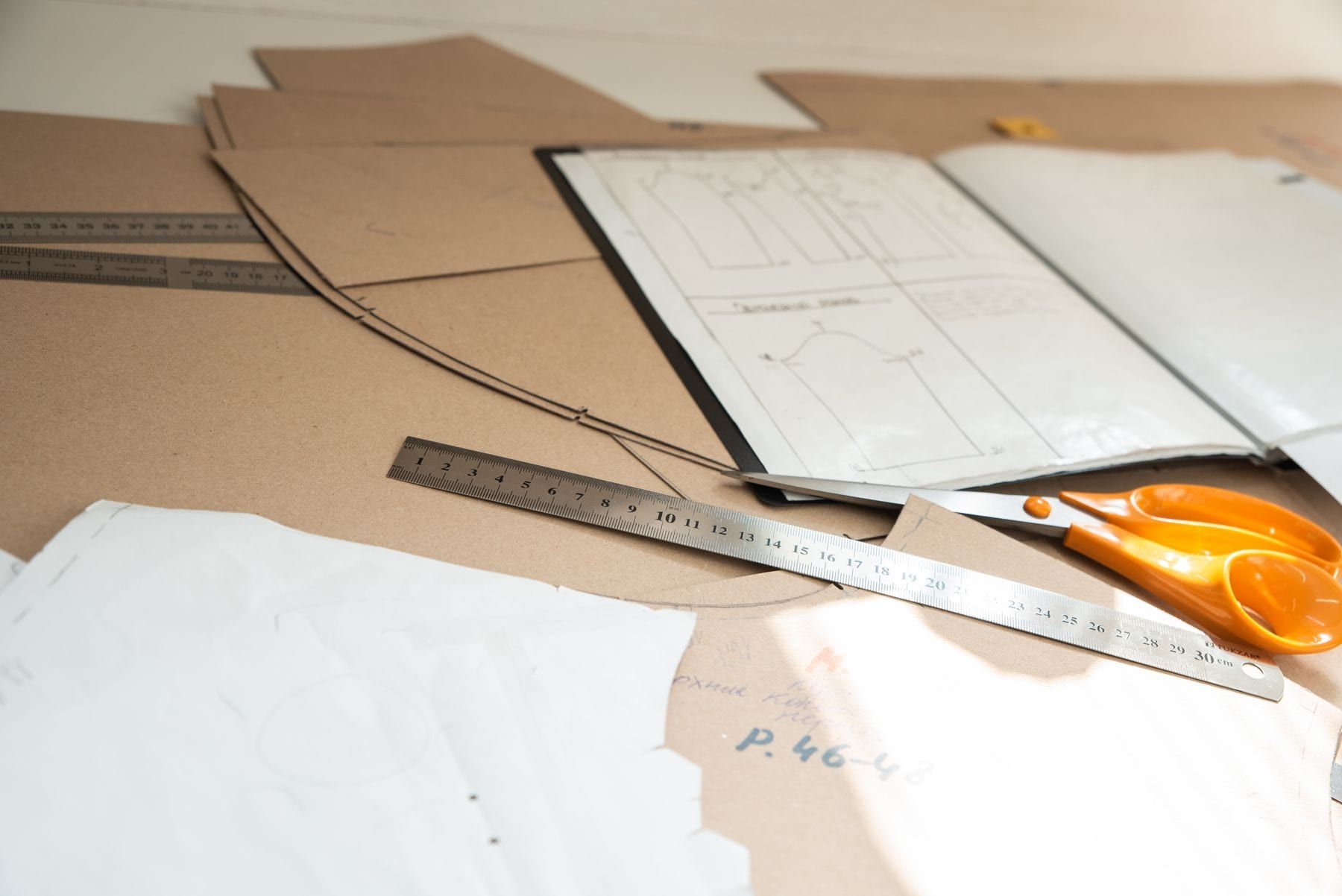
- Patterns are drafted digitally and stored per style, so a re-order cuts from the same pattern
- Fit comments from the sample are applied as measured pattern changes, not by eye
- Men's and women's patterns are drafted separately where the programme needs both
- Shrinkage allowance from the laundered size set is built into the production pattern
A uniform pattern has a harder job than a fashion pattern. The garment has to fit a range of bodies the buyer did not choose, survive a full working shift of reaching, lifting and sitting, and still look tidy at the end of it. Pattern making is where those requirements are turned into shapes on paper, and it is the stage where most fit problems are either solved or built in.
Fit for movement and a full shift
The first thing we ask about a uniform is what the wearer does in it. A receptionist and a warehouse picker can wear the same shirt style, but the picker needs room across the back and at the underarm, and the pattern has to provide it without making the shirt look baggy at the desk. Small changes carry a lot of weight here: a back yoke with a pleat, a slightly deeper armhole, a sleeve head that is not too high.
Body length is the second question. A shirt that is meant to be tucked in needs a longer tail than one worn out, and a tunic worn over trousers needs its hem to sit where the buyer wants it on the shortest and tallest staff. We set tuck-in length on the pattern rather than relying on staff to buy a size up.
Trousers are drafted with the same logic. A housekeeping trouser with an elastic waist and a gusset sits differently from a flat-front corporate trouser, and we do not use one pattern for both.
The tunic and trouser blocks are described under housekeeping uniforms.
Women’s darts or a unisex block
Many uniform programmes default to a unisex block because it simplifies ordering. It works in the middle of the size range and fails at the ends: women in small sizes get a shirt that is wide at the shoulder and long in the sleeve, and the fit through the bust and waist is shapeless. Where a programme has enough women to justify it, we draft a separate women’s pattern with bust and waist darts, a narrower shoulder and a shorter sleeve. The two patterns are drafted to look like the same garment when worn side by side, so the team still reads as one uniform.
If the numbers only justify one pattern, we say so and draft the unisex block with the size range you actually have, rather than an idealised one.
Separate men’s and women’s ranges are then graded from their own blocks; see size grading.
From fit comments to pattern changes
After the fit sample is reviewed we ask for photos and, where possible, a measurement. A comment such as “the sleeve is tight when reaching forward” becomes a specific change to the armhole and sleeve head, recorded on the pattern with the reason. The revised pattern is sampled again if the change is large. Once the base size is approved and the laundered size set has given us real shrinkage figures, the production pattern is finalised and handed to grading. Changes after that point mean the grade is redone, which is why we hold fit approval before grading rather than after.
Fit samples and the laundered size set are described under sample development.
§ 01When Buyers Need This
Situations this service answers
If none of these describe your project, this probably is not the step you need — tell us what you are actually trying to solve.
- You have a design sketch or reference garment but no pattern to cut from
- Your current uniform pulls across the back or rides up when staff reach or bend
- Women on your team are wearing a men's or unisex cut that does not fit through the bust and waist
- Shirts come untucked during a shift because the body length is too short
- You want the same style offered in a fitted women's cut and a regular men's cut
- An old pattern from a previous supplier no longer produces the garment you remember
§ 02Our Process
How this step runs
- 01
Fit brief
We record what the wearer does in the garment, how it is worn (tucked, over a base layer, with a belt) and any complaints about the current uniform.
- 02
Block selection or draft
The closest existing block is chosen, or a new pattern is drafted from your tech pack or reference garment.
- 03
First pattern and sample
The pattern is cut and sewn in the base size for fit review.
- 04
Fit correction
Comments and measurements from the fit review are converted into pattern changes and a second sample is made if needed.
- 05
Production pattern
Shrinkage allowance from the laundered sample is applied and the pattern is finalised for grading.
- 06
Pattern retention
The final pattern is stored with the style record and used for every future order.
§ 03What We Need From You
Inputs required
The faster these arrive, the fewer rounds development takes.
- A tech pack, a reference garment or a base block choice with your changes described
- A measurement chart if you have one, or the body measurements of the people you want to fit
- How the garment is worn and what the wearer does in it
- Whether you need men's, women's or unisex patterns, or all three
- Fit review comments with photos and measurements after the sample
§ 04Options
Choices available
- Fitted women's pattern with bust and waist darts, or a straighter unisex block
- Regular, relaxed or tailored fit for the same style
- Extended body length for tuck-in shirts and tunics
- Action back pleats, gusseted underarms or articulated knees for movement
- Separate short and long sleeve patterns from one body
- Pattern drafted from an existing garment you send us
§ 05Limitations
What this cannot do
Constraints stated up front are cheaper for both of us than constraints discovered in production.
LimitationsWhat this cannot do
- 01A pattern from a reference garment reproduces that garment's fit, including any faults it has
- 02Fit cannot be judged from photos alone; a physical sample worn by a person of the right size is needed
- 03One pattern cannot fit every body shape; a unisex block compromises at the ends of the size range
- 04Stretch fabrics and rigid fabrics need different patterns; a pattern made for one does not transfer to the other
- 05Changes requested after grading is complete mean the grade has to be redone
- 06We do not draft patterns for certified protective clothing
§ 06Quality
How it gets verified
- The sample is measured against the chart at every point before it is sent for review
- Fit is reviewed on a person, not only on a form, and the review is photographed from three angles
- Pattern changes are recorded with the measurement that prompted them, so the reason is traceable
- Shrinkage allowance is taken from the laundered size set in the actual fabric, not from a generic figure
- The final pattern is checked against the pre-production sample before it is released to cutting
Step 5 of 13
Where this sits in production
Every order runs through the same sequence. Each step has its own page, its own approval, and its own way of going wrong.
- 01Private Label Uniforms
- 02OEM / ODM Uniform Manufacturing
- 03Sample Development
- 04Fabric Sourcing
- 05Pattern Making & Fit
- 06Size Grading
- 07Logo Embroidery & Printing
- 08Labels, Name Badges & Packaging
- 09Bulk Production
- 10Quality Control
- 11Uniform Programme Management
- 12Uniform Design
- 13Plus Size & Extended Size Uniforms
← Before this
Fabric Sourcing
Fabric sourcing for uniforms: stock colours versus custom dye lots, Pantone matching across different fibres, and what a lab dip approval actually covers.
After this →
Size Grading
Size grading for uniforms from XS to 5XL, separate men's and women's grades, children's 4-16 for schools, and how to plan a size ratio from an employee list.
Related Uniforms
Products this applies to
Related Fabrics
Fabrics this affects
§ 08FAQ
Pattern Making & Fit — common questions
Frequently asked12 Q
How does the sampling process work before bulk production?
We start from your tech pack, reference garment or a brief, then make a pre-production sample in the agreed fabric and colour with your logo applied. You review the sample, we revise it if needed, and once approved it is sealed as the reference for bulk production. Where a fabric or finish is new to your project, we wash-test the sample before sending it so you see how it behaves after laundering.
What size range do you produce, and do you grade children's sizes?
We grade adult sizes from XS through 5XL as standard and can extend the range on request. For school uniforms we also grade children's sizes by age or height band, using your existing size chart or one we develop with you during pattern making. Every size in the run is checked against the approved measurement chart before packing.
What logo file format do you need?
Vector files (AI, EPS or PDF) are preferred because they scale cleanly for both embroidery and printing. A high-resolution PNG is acceptable, as we can digitise it for embroidery, but small text and fine lines may need to be simplified. Please also send Pantone references or a physical colour swatch so thread and ink colours can be matched.
Can we mix sizes and colours within the minimum order?
Mixing sizes within one style is normal and does not affect the MOQ. Mixing colours is usually possible too, but each colour needs its own fabric lot, so the per-colour quantity may be subject to a minimum. Minimum order starts at 100 pcs per style; exact MOQ is quoted per project, including any per-colour split.
How much does a sample cost and how long does it take?
Sampling typically takes 7–15 days once the fabric, logo and fit details are agreed. Sample cost is quoted per project, as it depends on whether the fabric is in stock, how many logo positions are involved and how many styles you need. Sample charges are commonly offset against the bulk order once it is confirmed, and this is stated in the quotation.
Do you offer separate men's and women's fits?
Yes. Most of our uniform styles are patterned in both a men's and a women's fit, with differences in shoulder, chest, waist shaping and length, and we can also supply a unisex block if you prefer one chart for the whole team. We recommend including both fits in the sample round so staff can try them before you place the bulk order.
Should our logo be embroidered or printed?
Embroidery is the usual choice for polos, shirts and chef coats because it withstands repeated laundering and reads as more formal. Printing (screen or heat transfer) suits large-area artwork, fine gradients or lightweight fabrics where stitching would be heavy. Many customers use embroidery on the chest and printing for back panels or slogans, and we will advise which method suits each position.
Can uniforms be colour-coded by department or role?
Yes. Colour coding is commonly done with different body colours, contrast collars or piping, sleeve tape, or a coloured department label at the chest or hem. Each colour variant is treated as a separate fabric lot, so let us know the department split when you request a quote and we will confirm minimums per variant.
Can we send you an existing uniform to copy?
Yes. Send a reference garment and we will take the pattern and measurements from it, match the fabric as closely as possible, and make a counter sample for your approval. Where the original fabric is not available we will propose the nearest option and show you both swatches. This is one of the most common ways our customers move a uniform programme to us.
Can we get a size set for a fit trial before bulk?
Yes. After the sample style is approved we can make a graded size set so staff of different builds can try them on before you finalise the size breakdown. The size set is charged per garment and quoted per project, and any measurement adjustments you request are applied to the pattern before bulk cutting.
Do you make school uniforms with children's sizing and school crest embroidery?
Yes. We produce school polos, shirts, skirts and trousers graded across children's sizes by age or height, and embroider the school crest to your artwork. Blazers and jackets can be added to the same programme. Because school orders cover many sizes in small quantities, send the size breakdown early and we will confirm the MOQ per style in the quotation.
What information should we send to get a quote?
Send the garment types, approximate quantity per style, preferred fabric or a reference garment, logo artwork with placement, and the destination country. If you have a size breakdown, a target price or a required delivery date, include those too. With this we can return a quotation covering price, MOQ, sample terms and lead time.
Request for quotation
Need pattern making & fit for your project?
Send your product requirements and we will come back with a plan for this step and a quotation for the whole order.
What to sendRFQ
- 01Logo file (AI / PDF / PNG)
- 02Styles and colours
- 03Quantity per style
- 04Size range or headcount
- 05Deadline and destination
Minimum order starts at 100 pcs per style; exact MOQ is quoted per project.