Manufacturing
Private Label Uniforms
Private label uniform manufacturing from Dongguan. Your logo, labels and thread colour applied consistently across shirts, polos and jackets.
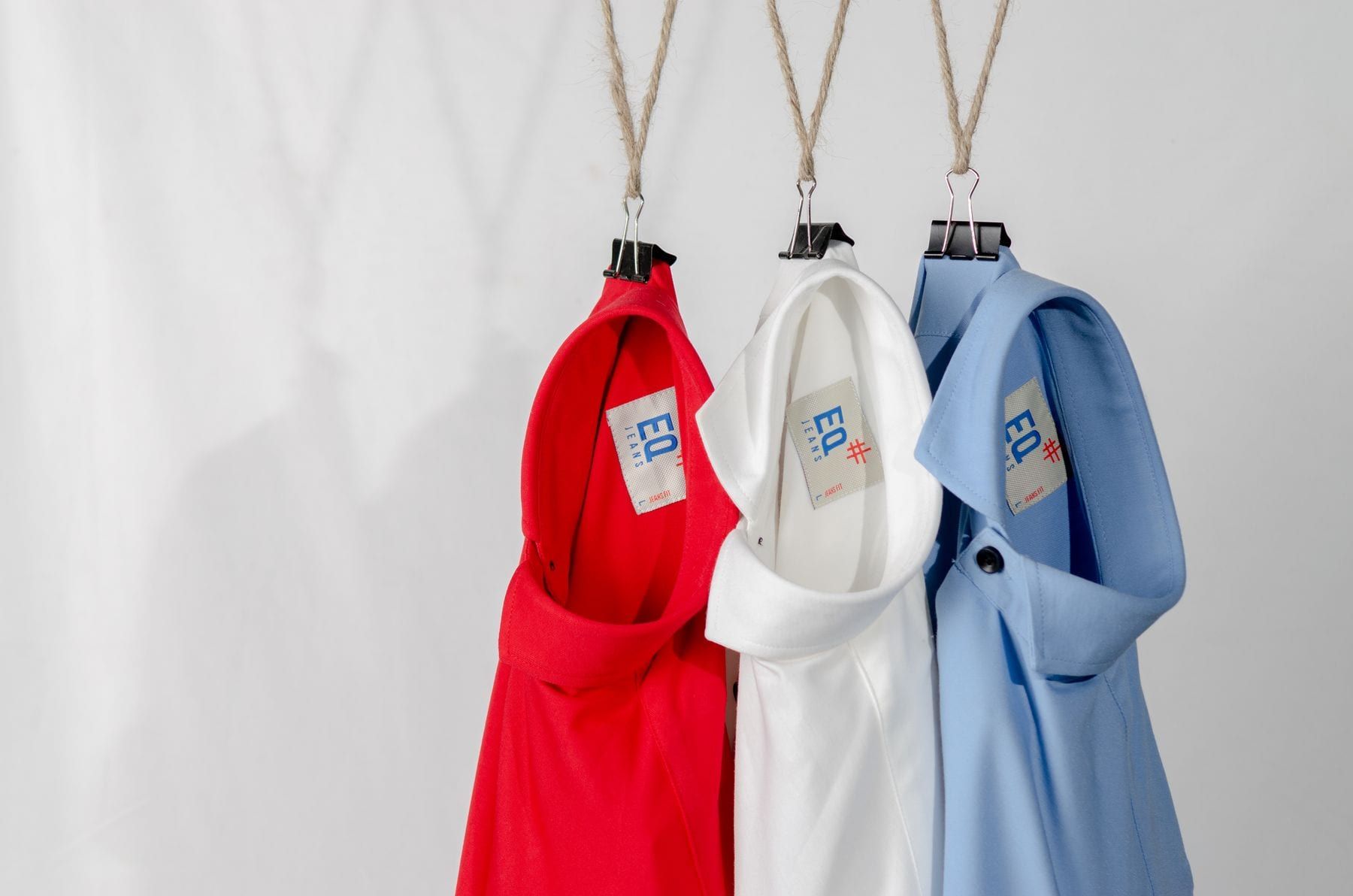
- One approved logo file and one thread colour reference are used for every garment type in a programme
- Woven brand labels, care labels and size labels are ordered once and applied across all styles
- Retained patterns and approved samples mean a re-order matches the first delivery
- Established 2006, manufacturing corporate, hospitality, school and workwear uniforms in Dongguan
Private label means the uniforms leave our factory carrying your brand, not ours. The woven label at the neck, the care label, the size label, the logo on the chest and the hang tag all follow your artwork. For a uniform brand, a distributor or a company with a strong identity, this is the difference between buying garments and owning a programme.
Most of the work happens before the first garment is cut. Once the brand assets, label stock and colour references are settled, every style in the programme draws on the same set, and a re-order two years later draws on it again.
One logo file, one thread colour, every garment type
The most common complaint we hear from buyers switching to us is that their polo logo and their jacket logo did not match. Two decorators, two digitised files, two thread shades. We avoid this by digitising the logo once, recording the thread colour code, and using that same file and thread on shirts, polos, jackets and caps. Where a fabric needs a different technique, such as a heat transfer on a lightweight poplin instead of embroidery, the ink is matched to the same reference so the colour reads the same across the set.
The same applies to labels. A single woven brand label design is ordered in the quantity the programme needs, then sewn into every style. Care labels are proofed per garment because fibre content and wash instructions differ, but the layout and brand mark stay constant.
Technique and placement standards are set out under logo embroidery and printing.
Building a programme that can be re-ordered
Uniform programmes are not one-off orders. Staff join, sizes change, a new site opens. We keep the graded patterns, digitised logo files, approved samples and label stock on file, so a re-order of 100 polos in the following year is cut from the same pattern and decorated from the same file as the original. Fabric colour continuity is handled by recording the dye lot and, where a stock colour has moved, sending a lab dip before cutting.
We recommend ordering label stock with headroom on the first run. Trim suppliers have their own minimums, and running out of woven labels mid-programme can delay a small top-up order more than the garments themselves.
Small re-orders are cut from the retained files as described under bulk production.
Private label by industry
Chefwear. Chefwear brands run the line as a product business: core styles — the coat and the check trouser — repeat against sealed samples season after season, while seasonal colours drop alongside them. Many also use decoration as a service, so a trade customer’s logo is applied here before dispatch while the line itself ships under the brand’s own labels only.
Corporate wear. Brands and distributors usually mix two routes: proven sellers manufactured to their tech pack, new styles developed from our blocks for their approval. The recurring ask is range coherence — shirts, trousers and knitwear dyed to a single standard per colour, so next season’s brochure photographs beside this season’s stock without a colour argument.
Housekeeping. Workwear brands adding a housekeeping category want the spec reviewed against the category’s wash reality before bulk — pocket loading, gussets, closures that survive a mangle. They also want to own the specification outright: graded size charts supplied for their own size guide, wash-test records behind every style, and a range file maintained so a repeat season is a production run, not a re-development.
Restaurant. Hospitality apparel brands ask for two things first: confidentiality confirmed in writing, and goods that arrive shelf-ready — hang tags, barcodes, polybags, per-client carton splits. Size curves are built from their return data rather than a generic chart, and seasonal colours repeat against retained lab dips so next year’s black matches this year’s.
Retail. Chains and store brands use private label for staff kit and, increasingly, for resale lines. The trim set does the heavy lifting — woven labels, hang tags, folding boards, care labels worded for the destination market — all approved as physical strike-offs rather than PDFs. One production run can split: part packed for staff issue per store, part packed retail-ready for the shop floor.
School. Uniform distributors replacing a third-party brand want proven children’s blocks rather than a blank page, because the expensive part of schoolwear is getting fit right across a dozen or more sizes. Most launch narrow with polos and sweatshirts, hold exclusive lab-dipped colourways, offer crest embroidery to their school customers, and extend the line once the re-orders prove it.
What we need from you
A vector logo, a list of garment types with quantities per size, and either a brand guide with Pantone references or a physical swatch we can match to. If you have no established placement standard, we will propose one based on the garment and confirm it on the sample. Minimum order typically starts at 100 pcs per style; exact MOQ is quoted per project, and label minimums are confirmed in the quotation alongside the garments.
Label formats and per-employee packing are covered under labels and packaging.
§ 01When Buyers Need This
Situations this service answers
If none of these describe your project, this probably is not the step you need — tell us what you are actually trying to solve.
- You are a uniform brand or distributor and want garments carrying your own label, not the factory's
- Your staff wear several garment types and the logo, colours and labels must look identical on all of them
- You want to stop buying blank garments from one supplier and having them decorated by another
- You are opening new locations and need the same uniform reproduced months or years later
- You have a brand guide with Pantone references and need them followed on fabric, thread and labels
§ 02Our Process
How this step runs
- 01
Programme review
We list every garment type, colour and branding position you need, and confirm which fabrics and base styles cover them.
- 02
Brand asset setup
Your vector logo is digitised for embroidery and separated for print. Thread and ink colours are matched to your Pantone references and recorded.
- 03
Label and trim development
Woven brand labels, care labels, size labels and any hang tags are proofed on paper, then as physical strike-offs for your approval.
- 04
Sampling
One sample per garment type is made with the real labels and branding so you can see the whole programme together before bulk.
- 05
Bulk production
Cutting, sewing, decoration and labelling run against the approved samples and the recorded colour references.
- 06
Retention for re-orders
Patterns, digitised logo files, label stock and colour records are kept on file so a new-starter order matches the original.
§ 03What We Need From You
Inputs required
The faster these arrive, the fewer rounds development takes.
- Vector logo files (AI, EPS, PDF or SVG) and any brand guideline with Pantone or thread references
- The list of garment types, colours and quantities per size
- Label artwork or the text you want on the brand, care and size labels
- Placement instructions for each logo position, or a request for our standard placements
- The destination market, so care label wording and fibre content follow the right format
§ 04Options
Choices available
- Woven, printed or heat-transfer brand labels at the neck or waistband
- Embroidery, screen print, heat transfer or DTF for the logo, chosen per fabric
- Matching branding across shirts, polos, jackets, trousers and caps
- Employee name embroidery and department tags on top of the brand logo
- Per-employee packing with name and size stickers
- Hang tags, size stickers and carton labels carrying your brand
§ 05Limitations
What this cannot do
Constraints stated up front are cheaper for both of us than constraints discovered in production.
LimitationsWhat this cannot do
- 01Label stock and trims carry their own supplier minimums, which may exceed the garment quantity on a small programme
- 02Exact Pantone matches are not always possible on every fabric fibre; we match to an agreed tolerance
- 03We do not produce certified protective clothing such as EN ISO 20471 hi-vis or flame-retardant garments
- 04We do not design brand identities or logos; artwork must be supplied
- 05Garment dyeing is not done in-house, so garment colour is limited to fabric stock colours or custom dye lots
§ 06Quality
How it gets verified
- Logo placement is measured against the approved sample on each garment type, not only on the first style
- Thread and label colours are compared with the recorded reference under daylight before decoration begins
- Label content is checked against the approved proof for size, fibre content and care symbols
- The size-set sample is laundered before approval so shrinkage and label legibility after washing are known
- Final random inspection covers branding, labels and packing lists, not only sewing
Step 1 of 13
Where this sits in production
Every order runs through the same sequence. Each step has its own page, its own approval, and its own way of going wrong.
- 01Private Label Uniforms
- 02OEM / ODM Uniform Manufacturing
- 03Sample Development
- 04Fabric Sourcing
- 05Pattern Making & Fit
- 06Size Grading
- 07Logo Embroidery & Printing
- 08Labels, Name Badges & Packaging
- 09Bulk Production
- 10Quality Control
- 11Uniform Programme Management
- 12Uniform Design
- 13Plus Size & Extended Size Uniforms
Start of the sequence
This is where a new programme begins.
After this →
OEM / ODM Uniform Manufacturing
OEM production from your tech pack, or ODM development on our existing uniform blocks. How each route works, what you supply and where the trade-offs are.
Related Uniforms
Products this applies to
Related Fabrics
Fabrics this affects
§ 08FAQ
Private Label Uniforms — common questions
Frequently asked12 Q
What is your minimum order quantity for custom uniforms?
Minimum order starts at 100 pcs per style; exact MOQ is quoted per project. The figure depends on the fabric, colour and level of customisation involved, so send us the style, quantity and branding you have in mind and we will confirm the MOQ in the quotation.
What logo file format do you need?
Vector files (AI, EPS or PDF) are preferred because they scale cleanly for both embroidery and printing. A high-resolution PNG is acceptable, as we can digitise it for embroidery, but small text and fine lines may need to be simplified. Please also send Pantone references or a physical colour swatch so thread and ink colours can be matched.
Can we mix sizes and colours within the minimum order?
Mixing sizes within one style is normal and does not affect the MOQ. Mixing colours is usually possible too, but each colour needs its own fabric lot, so the per-colour quantity may be subject to a minimum. Minimum order starts at 100 pcs per style; exact MOQ is quoted per project, including any per-colour split.
How much does a sample cost and how long does it take?
Sampling typically takes 7–15 days once the fabric, logo and fit details are agreed. Sample cost is quoted per project, as it depends on whether the fabric is in stock, how many logo positions are involved and how many styles you need. Sample charges are commonly offset against the bulk order once it is confirmed, and this is stated in the quotation.
Should our logo be embroidered or printed?
Embroidery is the usual choice for polos, shirts and chef coats because it withstands repeated laundering and reads as more formal. Printing (screen or heat transfer) suits large-area artwork, fine gradients or lightweight fabrics where stitching would be heavy. Many customers use embroidery on the chest and printing for back panels or slogans, and we will advise which method suits each position.
Can you embroider individual staff names or add name badges?
Yes. We can embroider each employee's name directly on the garment from a list you supply, or add a badge holder, Velcro patch or removable name tag if staff change frequently. Per-name embroidery is priced per garment and needs the final name list before production starts, so it is confirmed in the quotation.
Can we re-order small top-up quantities for new staff?
Yes. Repeat orders are made against your sealed sample and the approved lab dips, so new garments match the original run. Top-up orders are subject to minimums quoted per project, and reserving fabric from the first run can make small repeats easier, so mention expected staff turnover when you place the initial order.
Can you pack uniforms per employee by name and size?
Yes. We can bag each employee's garments together, label the pack with name, department and size, and carton them by site or branch so your team can hand them out without re-sorting. We need the distribution list before packing starts, and any extra packaging cost is confirmed in the quotation.
Can you produce uniforms under our own brand with our labels?
Yes. We work OEM/ODM and can sew in your woven or printed main labels, size and care labels, hangtags and branded packaging so the finished garment carries your brand rather than ours. Send label artwork or existing label samples and we will source or produce them to match.
Do you work with uniform distributors and brands?
Yes. A large part of our production is for uniform distributors and workwear brands who resell under their own labels. We can hold approved samples and lab dips on file, run repeat programmes for their end customers and ship blind or with the distributor's own packaging and documentation.
Do you make school uniforms with children's sizing and school crest embroidery?
Yes. We produce school polos, shirts, skirts and trousers graded across children's sizes by age or height, and embroider the school crest to your artwork. Blazers and jackets can be added to the same programme. Because school orders cover many sizes in small quantities, send the size breakdown early and we will confirm the MOQ per style in the quotation.
What information should we send to get a quote?
Send the garment types, approximate quantity per style, preferred fabric or a reference garment, logo artwork with placement, and the destination country. If you have a size breakdown, a target price or a required delivery date, include those too. With this we can return a quotation covering price, MOQ, sample terms and lead time.
Request for quotation
Need private label uniforms for your project?
Send your product requirements and we will come back with a plan for this step and a quotation for the whole order.
What to sendRFQ
- 01Logo file (AI / PDF / PNG)
- 02Styles and colours
- 03Quantity per style
- 04Size range or headcount
- 05Deadline and destination
Minimum order starts at 100 pcs per style; exact MOQ is quoted per project.