Fabric Guide
Piqué for Uniform Polo Shirts — Fabric Guide
The textured knit behind most uniform polo shirts — breathable, forgiving of wear and a natural base for an embroidered logo.

What is piqué?
Piqué is a knitted fabric with a raised, waffle-like texture. The pattern is knitted in, not printed or embossed, and it is the reason a polo shirt looks and feels the way it does. Because piqué is a knit, it stretches; because the surface is textured and slightly open, it breathes well and does not cling.
Uniform piqué comes in three families. Cotton piqué is the softest and most breathable but shrinks and fades the most. Polyester/cotton blends, usually 65/35 or 50/50, are the standard for staff polos because they keep their shape and colour through weekly washing. Polyester performance piqué is used for sports and hot-climate programmes where quick drying matters more than a cotton hand feel.
The styles it goes into are set out on our polo shirts page.
Where does piqué fit in a uniform programme?
Piqué is the polo fabric. The question buyers usually bring us is piqué versus jersey.
Jersey is the smooth, flat knit of a T-shirt. It is softer, lighter and cheaper, and it prints well because the surface is flat. But jersey shows every crease, clings when damp, pills more visibly and loses its collar shape faster. For a uniform polo that has to look presentable at the end of a shift and after fifty washes, piqué is the safer choice. The texture hides wear, the fabric has more body, and the collar holds. Jersey polos are worth considering only for promotional runs, very hot climates where weight is the priority, or when a printed all-over design needs a flat surface.
Weight is the other decision. Light piqué feels cool and costs less, but it is the version that causes embroidery complaints. A knit stretches under the hoop and under the needle; on a thin piqué a dense chest logo pulls the fabric in and leaves a puckered halo around the design that washing makes worse, not better. Mid-weight piqué on a cut-away stabiliser gives a flat, stable logo, and the difference is obvious on the first sample. If the logo is large or solid-filled, choose the heavier cloth or ask us to reduce stitch density in digitising.
Piqué polos serve almost every sector: corporate casual, retail, hospitality back-of-house, logistics, facilities, school sports kit. The main reason to move away from piqué is a formal dress code, where a woven poplin or oxford shirt reads as smarter.
How a logo is digitised for knit is explained under logo embroidery and printing.
What should you confirm before bulk?
- Fibre blend and weight on the swatch card, with a retained cutting from the approved lot.
- A washed sample polo, checked for length shrinkage, twisting of side seams and collar roll.
- Collar and cuff type (knitted flat rib or self-fabric), colour match to the body, and how they behave after washing.
- An embroidery trial at final logo size on the chosen weight, with the stabiliser specified, then washed and inspected for puckering.
- Shade continuity between body and rib trims, which are often knitted separately.
- Placket construction, button count and button colour, which are the details that vary most between polo styles.
- Whether a moisture-wicking performance piqué is genuinely needed or a blend will serve.
Stock-colour piqué is supplied against the garment quantity with no fabric minimum of its own; a custom-dyed lot carries a mill minimum, and we tell you the figure before you decide.
Each of these is settled at the sample development stage, before bulk fabric is ordered.
§ 01Properties
How it behaves
- Fibre type
- 100% cotton, polyester/cotton blends (commonly 65/35 or 50/50) and 100% polyester performance versions
- Construction
- Weft knit with a raised waffle or honeycomb texture; a knitted, not woven, cloth
- Weight
- Light piqué is used for warm-climate and promotional polos; mid and heavier weights for uniform programmes that see daily wear and laundering.
- Hand feel
- Dry, textured, slightly open; cotton versions soften with washing
- Stretch
- Mechanical stretch from the knit structure; spandex versions add recovery
- Drape
- Soft but with more body than jersey; holds a collar and placket shape
- Breathability
- Good; the raised texture keeps the fabric off the skin and lets air move
- Typical weight
- 180–240 gsm
§ 02Key Characteristics
The short version
- Waffle texture that hides wear and light soiling
- Breathable, with natural knit stretch
- Best base fabric for logo embroidery
- Cotton, blend and performance polyester options
- Holds a collar better than jersey
Suitable uniform styles5 items
- 01Corporate and office polo shirts
- 02Retail and hospitality staff polos
- 03Logistics, warehouse and delivery polos
- 04School sports and PE polos
- 05Facilities and security polos
§ 03Production Notes
What to plan for
The practical consequences of choosing this fabric — the things that decide whether a bulk order goes smoothly.
| No. | Consideration | Note |
|---|---|---|
| 01 | Durability | Good for a knit; the texture hides pilling and wear better than jersey. Collars and cuffs are the first parts to lose shape, and blends outlast pure cotton in a laundry. |
| 02 | Colourfastness & laundering | Polyester/cotton piqué holds colour well through domestic and light industrial wash. Dark cotton shades fade over many cycles; check the wash routine the wearer will use. |
| 03 | Easy care | Blends recover from wrinkles and dry quickly; pure cotton creases more and is slower to dry. Domestic and light commercial laundering is normal; high-temperature industrial cycles are better suited to polyester-major versions. |
| 04 | Shrinkage considerations | Cotton piqué can shrink noticeably in length; compacting and pre-shrinking finishes and a polyester share reduce it. Residual shrinkage is confirmed on the bulk lot. |
| 05 | Logo, printing & dyeing | The standard cloth for embroidered logos. Mid-weight piqué carries a chest logo well on a cut-away stabiliser; light piqué puckers around dense designs because the knit stretches under the needle. Print sits on the texture, so fine detail and thin lines break up; bold artwork prints better, and polyester versions take sublimation. |
| 06 | Sampling considerations | Approve weight, colour and collar type on a sample polo, then wash it and check length shrinkage, collar roll and the embroidered logo. |
| 07 | Production considerations | Knit fabrics need a flatlock or overlock construction and a knitted or ribbed collar and cuffs matched in colour; collar quality is the most visible variable in a polo. |
Related Uniforms
Uniforms made in piqué
Where this fabric earns its place in a uniform programme.
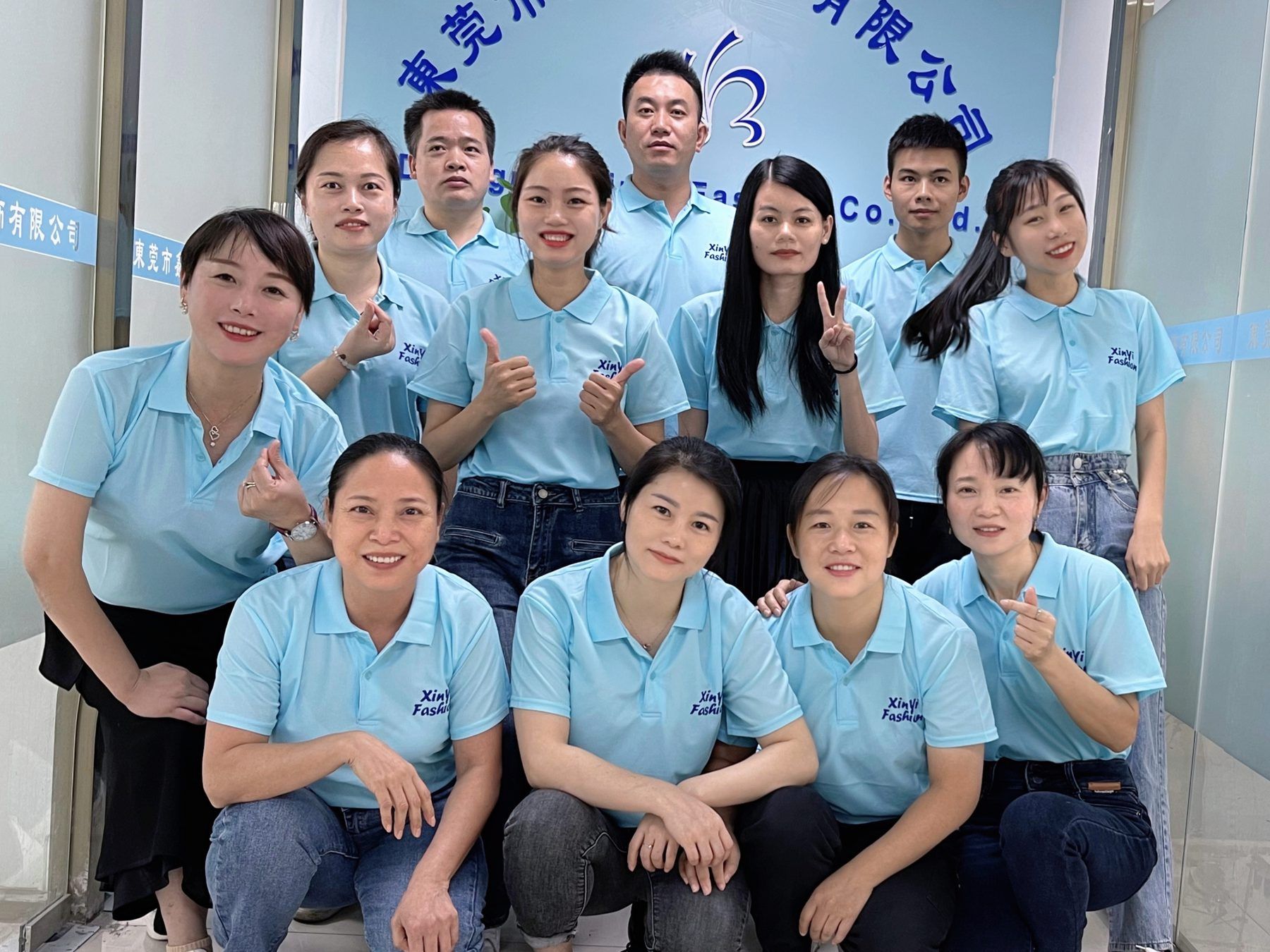
Corporate Uniforms
Coordinated office, front-desk and customer-facing sets in matched fabrics and colours.
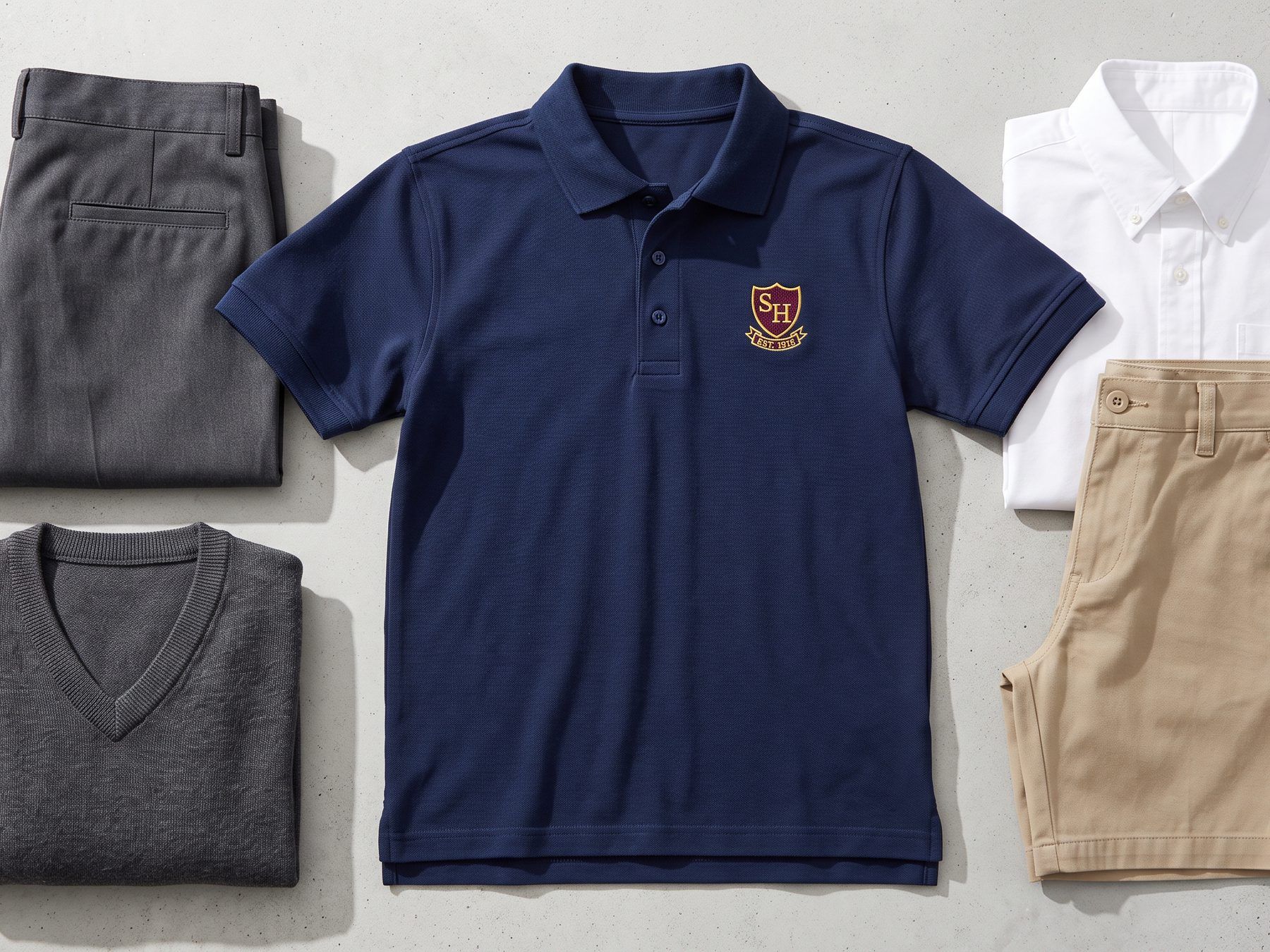
School Uniforms
Polos, shirts, trousers, skirts and knitwear in children's and adult sizes with embroidered crests.
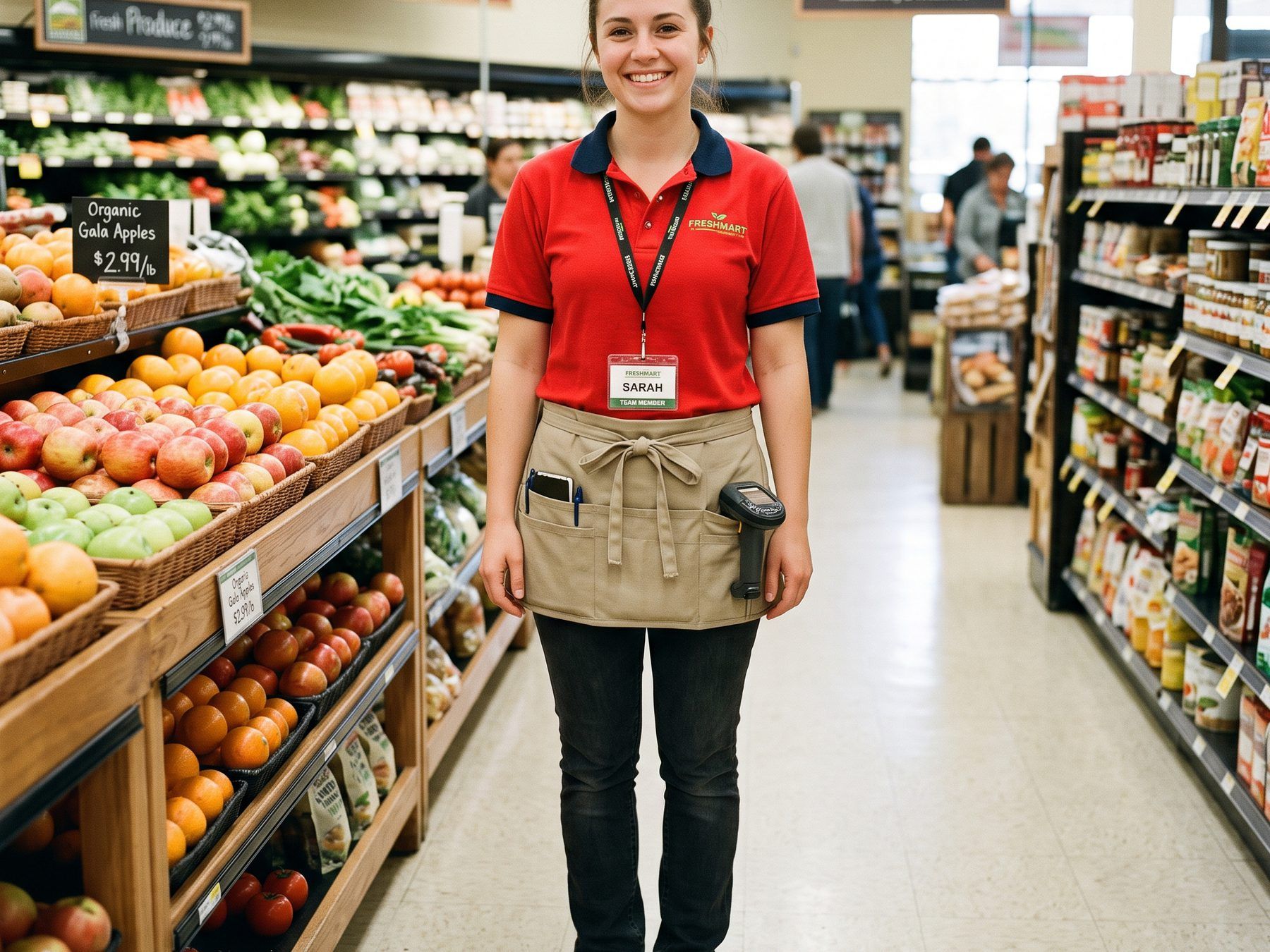
Retail Uniforms
Store staff polos, shirts and vests with embroidered logos and re-orders sized for staff turnover.
Related Manufacturing
Manufacturing steps this affects
Sample Development
Uniform sample development: fit samples per gender, a laundered size-set sample and a signed pre-production sample before any bulk cutting starts.
Logo Embroidery & Printing
Logo embroidery, screen print, heat transfer and DTF for uniforms. Digitising, stitch count, placement standards and per-employee name embroidery explained.
Bulk Production
Bulk uniform production: cut plan by size ratio, fabric colour continuity, in-line checks and re-orders for new starters against retained patterns.
§ 05FAQ
Fabric questions we get asked
Frequently asked13 Q
How does the sampling process work before bulk production?
We start from your tech pack, reference garment or a brief, then make a pre-production sample in the agreed fabric and colour with your logo applied. You review the sample, we revise it if needed, and once approved it is sealed as the reference for bulk production. Where a fabric or finish is new to your project, we wash-test the sample before sending it so you see how it behaves after laundering.
What logo file format do you need?
Vector files (AI, EPS or PDF) are preferred because they scale cleanly for both embroidery and printing. A high-resolution PNG is acceptable, as we can digitise it for embroidery, but small text and fine lines may need to be simplified. Please also send Pantone references or a physical colour swatch so thread and ink colours can be matched.
How much does a sample cost and how long does it take?
Sampling typically takes 7–15 days once the fabric, logo and fit details are agreed. Sample cost is quoted per project, as it depends on whether the fabric is in stock, how many logo positions are involved and how many styles you need. Sample charges are commonly offset against the bulk order once it is confirmed, and this is stated in the quotation.
Should our logo be embroidered or printed?
Embroidery is the usual choice for polos, shirts and chef coats because it withstands repeated laundering and reads as more formal. Printing (screen or heat transfer) suits large-area artwork, fine gradients or lightweight fabrics where stitching would be heavy. Many customers use embroidery on the chest and printing for back panels or slogans, and we will advise which method suits each position.
Can you embroider individual staff names or add name badges?
Yes. We can embroider each employee's name directly on the garment from a list you supply, or add a badge holder, Velcro patch or removable name tag if staff change frequently. Per-name embroidery is priced per garment and needs the final name list before production starts, so it is confirmed in the quotation.
Which fabrics do you keep in stock and which do you source to order?
We regularly run polycotton twill, cotton drill, pique, oxford, poplin, polyester-spandex, gabardine and fleece or softshell, and standard colours in these are usually available quickly. Special colours, weights or finishes are sourced to order from our mills, which adds fabric lead time that is confirmed in the quotation. Send us a swatch or a reference garment and we will tell you which route applies.
Can you match a Pantone colour across different fabrics?
We can lab-dip to your Pantone reference, but the same colour will look slightly different on a cotton twill, a polyester pique and a softshell because each fibre takes dye differently. For a multi-garment uniform programme we recommend approving a lab dip for each fabric together so the set reads as one colour family. Approved lab dips are kept on file for re-orders.
Will the uniforms hold up to industrial laundering?
Polycotton twill, cotton drill and polyester-rich fabrics are the usual choices for garments that go through commercial laundries, and we specify fabrics and threads accordingly. On request we wash-test the sample and report colourfastness and shrinkage before you approve it. Tell us your laundering method and temperature when you enquire so we can select fabric and construction to suit.
Do you offer wrinkle-free or easy-care finishes?
Yes. Easy-care finishes are available on poplin, oxford and polycotton twill for shirts and trousers, and polyester-blend fabrics naturally resist creasing. The finish is confirmed on the sample so you can check the hand feel, and any additional fabric cost is shown in the quotation.
Can we send you an existing uniform to copy?
Yes. Send a reference garment and we will take the pattern and measurements from it, match the fabric as closely as possible, and make a counter sample for your approval. Where the original fabric is not available we will propose the nearest option and show you both swatches. This is one of the most common ways our customers move a uniform programme to us.
Can we get a size set for a fit trial before bulk?
Yes. After the sample style is approved we can make a graded size set so staff of different builds can try them on before you finalise the size breakdown. The size set is charged per garment and quoted per project, and any measurement adjustments you request are applied to the pattern before bulk cutting.
Do you make school uniforms with children's sizing and school crest embroidery?
Yes. We produce school polos, shirts, skirts and trousers graded across children's sizes by age or height, and embroider the school crest to your artwork. Blazers and jackets can be added to the same programme. Because school orders cover many sizes in small quantities, send the size breakdown early and we will confirm the MOQ per style in the quotation.
What information should we send to get a quote?
Send the garment types, approximate quantity per style, preferred fabric or a reference garment, logo artwork with placement, and the destination country. If you have a size breakdown, a target price or a required delivery date, include those too. With this we can return a quotation covering price, MOQ, sample terms and lead time.
Request for quotation
Sample piqué before you commit
Tell us the uniform you are building and how it will be laundered; we will send swatches, propose a construction and quote it.
What to sendRFQ
- 01Logo file (AI / PDF / PNG)
- 02Styles and colours
- 03Quantity per style
- 04Size range or headcount
- 05Deadline and destination
Minimum order starts at 100 pcs per style; exact MOQ is quoted per project.