Manufacturing
Sample Development for Uniforms
Uniform sample development: fit samples per gender, a laundered size-set sample and a signed pre-production sample before any bulk cutting starts.
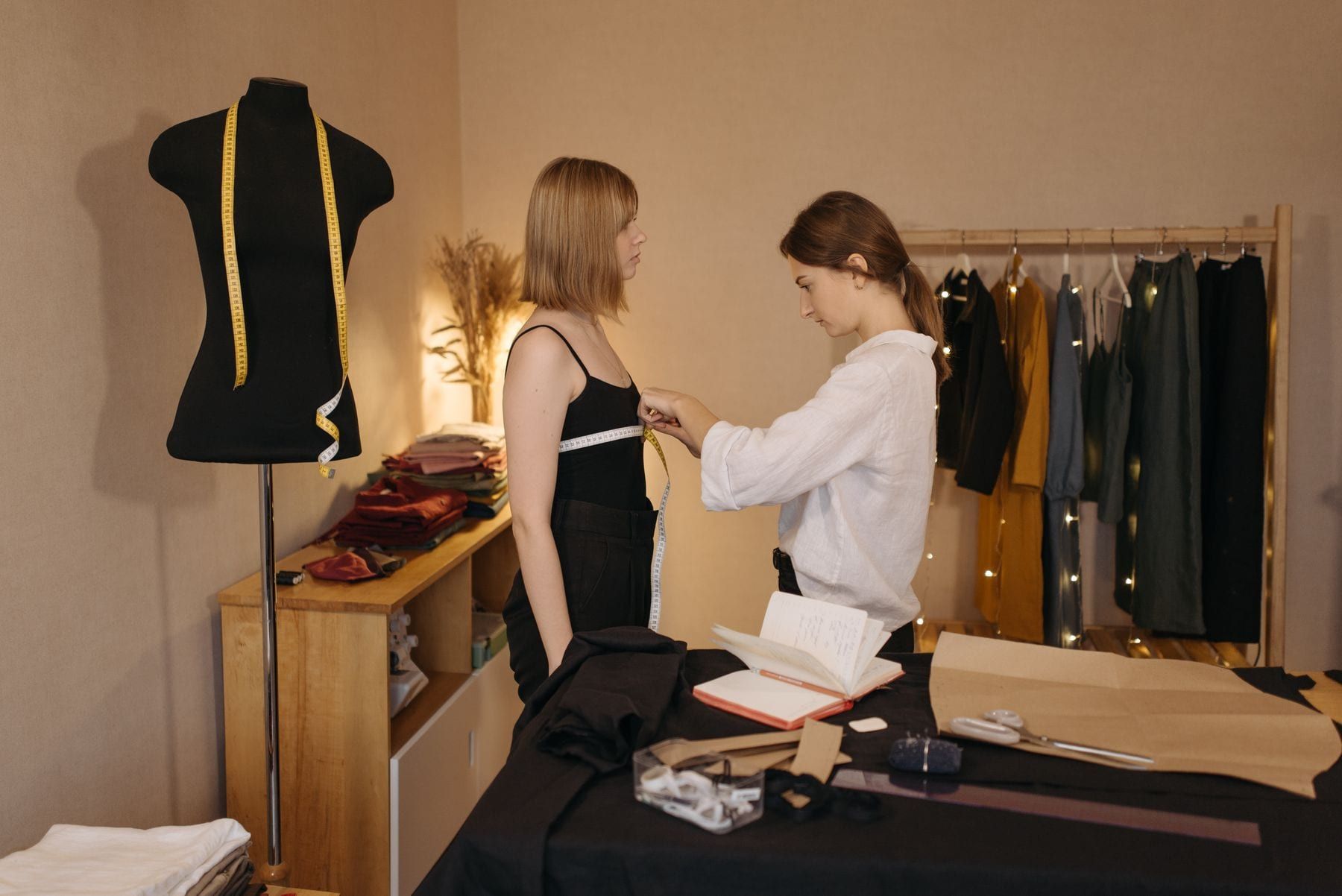
- Every sample is measured against the spec and the report travels with the garment
- Size-set samples are laundered before approval so post-wash measurements are known
- Men's and women's fit samples are made separately where the programme has both
- The signed pre-production sample stays on the sewing line as the bulk reference
A sample is the point where a uniform stops being a drawing and becomes something a person can put on. Everything after it, the grading, the cut plan and the bulk order, is built on what was approved at this stage. For that reason we do not skip samples, and we do not treat a photo of a sample as approval.
Sample cost and lead time depend on the style and whether bulk fabric is available, and are confirmed in the quotation.
Fit samples by gender
Uniform programmes almost always dress both men and women. A unisex shirt fits neither group well at the ends of the size range, so where the programme has men’s and women’s styles we make a fit sample of each. The women’s sample is reviewed on a woman, the men’s on a man, in the sample size. Comments come back to us with photos from the front, side and back, and ideally with the measurement that felt wrong. “Sleeve is short” is useful; “sleeve is 2 cm short at the wrist” is much more useful.
Fit samples in the base size tell us the pattern is right. They do not tell us the grading is right, which is why the next stage exists.
The fit changes that come out of this review are made under pattern making.
The size-set sample, laundered before approval
Once the base size is approved, we make the style across the size range you need. Every garment in the set is washed and dried once, following the care instructions that will go on the label, and then measured. This does two things. It confirms that the grade rules produce a sensible garment at 3XL as well as at S, and it puts real shrinkage numbers on the record. A polycotton twill shirt that loses a small amount in length after the first wash needs that allowance built into the cut, not discovered by staff after delivery.
The laundered size set is the sample we ask buyers to approve, because it is the closest thing to what an employee will wear after the first week.
The size range itself is set up under size grading.
Pre-production sample and sign-off
The last sample is made in the bulk fabric with the real labels, thread, buttons and branding. It is measured, photographed with a ruler at each logo position and sealed. One copy stays on the sewing line and one is retained for future re-orders. Bulk production is inspected against it. If anything on the pre-production sample needs changing, we change it before cutting, not after.
Bulk is then cut and inspected against this sample; see bulk production.
§ 01When Buyers Need This
Situations this service answers
If none of these describe your project, this probably is not the step you need — tell us what you are actually trying to solve.
- You are starting a new uniform programme and have never seen the style on your staff
- Your existing uniform fits some employees badly and you want the fit corrected before re-ordering
- You need to confirm a fabric, colour and logo combination in the hand, not on screen
- Procurement requires a physical approved sample on file before the purchase order is raised
- You are moving an existing design to us and need to check it still comes out the same
- You are choosing between two fabrics and want the same style made in both
§ 02Our Process
How this step runs
- 01
Spec confirmation
Style, fabric, colour, size to sample and branding are agreed in writing before the sample is cut.
- 02
First fit sample
One garment per style, usually in the base size, made in the closest available fabric if bulk fabric is not yet in hand.
- 03
Fit review
You try the sample on staff of the right size and send comments and photos. We compare the garment with the measurement chart.
- 04
Revised sample
Pattern changes are applied and a second sample is made where the comments require it.
- 05
Size-set sample
Once the base size is approved, a run across the size range is made, laundered and measured to confirm the grading.
- 06
Pre-production sample
A final garment in bulk fabric with all trims, labels and branding is signed off as the standard for production.
§ 03What We Need From You
Inputs required
The faster these arrive, the fewer rounds development takes.
- The style reference: a tech pack, a garment to copy, or a base block choice with your changes
- Fabric choice, or a target composition and weight if we are to source it
- The size to sample and, for a size set, the range you need
- Logo artwork and placement if branding is to appear on the sample
- Named people or a fit model in the sample size to review fit
§ 04Options
Choices available
- Fit sample in available stock fabric, or in the bulk fabric once it is in hand
- Separate men's and women's fit samples for the same style
- Size-set sample across your full range or a partial set of key sizes
- Sample with full branding and labels, or blank for fit only
- Duplicate samples for head office and site review
- Photo and measurement report sent before the sample ships
§ 05Limitations
What this cannot do
Constraints stated up front are cheaper for both of us than constraints discovered in production.
LimitationsWhat this cannot do
- 01Sample cost and sample lead time are quoted per project and confirmed in the quotation
- 02A fit sample made in substitute fabric shows fit, not the final drape, colour or hand feel
- 03Fit comments without measurements or photos are hard to act on; "a bit tight" does not tell us where
- 04Custom-dyed fabric is not available for the first sample until the dye lot is produced
- 05Sampling does not include certified protective clothing, which we do not make
- 06Each round of changes adds a sample round; extensive redesign at the pre-production stage restarts the process
§ 06Quality
How it gets verified
- Each sample is measured at the points on the chart and the results are recorded against tolerance
- Size-set samples are laundered before measuring so shrinkage is included in the approval
- Branding placement on the sample is photographed with a ruler to set the tolerance for bulk
- The approved sample is sealed and retained; bulk garments are compared with it during inspection
- Fabric on the pre-production sample is from the bulk lot, so colour and weight match production
Step 3 of 13
Where this sits in production
Every order runs through the same sequence. Each step has its own page, its own approval, and its own way of going wrong.
- 01Private Label Uniforms
- 02OEM / ODM Uniform Manufacturing
- 03Sample Development
- 04Fabric Sourcing
- 05Pattern Making & Fit
- 06Size Grading
- 07Logo Embroidery & Printing
- 08Labels, Name Badges & Packaging
- 09Bulk Production
- 10Quality Control
- 11Uniform Programme Management
- 12Uniform Design
- 13Plus Size & Extended Size Uniforms
← Before this
OEM / ODM Uniform Manufacturing
OEM production from your tech pack, or ODM development on our existing uniform blocks. How each route works, what you supply and where the trade-offs are.
After this →
Fabric Sourcing
Fabric sourcing for uniforms: stock colours versus custom dye lots, Pantone matching across different fibres, and what a lab dip approval actually covers.
Related Uniforms
Products this applies to
Related Fabrics
Fabrics this affects
§ 08FAQ
Sample Development — common questions
Frequently asked12 Q
How does the sampling process work before bulk production?
We start from your tech pack, reference garment or a brief, then make a pre-production sample in the agreed fabric and colour with your logo applied. You review the sample, we revise it if needed, and once approved it is sealed as the reference for bulk production. Where a fabric or finish is new to your project, we wash-test the sample before sending it so you see how it behaves after laundering.
What size range do you produce, and do you grade children's sizes?
We grade adult sizes from XS through 5XL as standard and can extend the range on request. For school uniforms we also grade children's sizes by age or height band, using your existing size chart or one we develop with you during pattern making. Every size in the run is checked against the approved measurement chart before packing.
What logo file format do you need?
Vector files (AI, EPS or PDF) are preferred because they scale cleanly for both embroidery and printing. A high-resolution PNG is acceptable, as we can digitise it for embroidery, but small text and fine lines may need to be simplified. Please also send Pantone references or a physical colour swatch so thread and ink colours can be matched.
Can we mix sizes and colours within the minimum order?
Mixing sizes within one style is normal and does not affect the MOQ. Mixing colours is usually possible too, but each colour needs its own fabric lot, so the per-colour quantity may be subject to a minimum. Minimum order starts at 100 pcs per style; exact MOQ is quoted per project, including any per-colour split.
How much does a sample cost and how long does it take?
Sampling typically takes 7–15 days once the fabric, logo and fit details are agreed. Sample cost is quoted per project, as it depends on whether the fabric is in stock, how many logo positions are involved and how many styles you need. Sample charges are commonly offset against the bulk order once it is confirmed, and this is stated in the quotation.
Do you offer separate men's and women's fits?
Yes. Most of our uniform styles are patterned in both a men's and a women's fit, with differences in shoulder, chest, waist shaping and length, and we can also supply a unisex block if you prefer one chart for the whole team. We recommend including both fits in the sample round so staff can try them before you place the bulk order.
Should our logo be embroidered or printed?
Embroidery is the usual choice for polos, shirts and chef coats because it withstands repeated laundering and reads as more formal. Printing (screen or heat transfer) suits large-area artwork, fine gradients or lightweight fabrics where stitching would be heavy. Many customers use embroidery on the chest and printing for back panels or slogans, and we will advise which method suits each position.
Can uniforms be colour-coded by department or role?
Yes. Colour coding is commonly done with different body colours, contrast collars or piping, sleeve tape, or a coloured department label at the chest or hem. Each colour variant is treated as a separate fabric lot, so let us know the department split when you request a quote and we will confirm minimums per variant.
Can we send you an existing uniform to copy?
Yes. Send a reference garment and we will take the pattern and measurements from it, match the fabric as closely as possible, and make a counter sample for your approval. Where the original fabric is not available we will propose the nearest option and show you both swatches. This is one of the most common ways our customers move a uniform programme to us.
Can we get a size set for a fit trial before bulk?
Yes. After the sample style is approved we can make a graded size set so staff of different builds can try them on before you finalise the size breakdown. The size set is charged per garment and quoted per project, and any measurement adjustments you request are applied to the pattern before bulk cutting.
Do you make school uniforms with children's sizing and school crest embroidery?
Yes. We produce school polos, shirts, skirts and trousers graded across children's sizes by age or height, and embroider the school crest to your artwork. Blazers and jackets can be added to the same programme. Because school orders cover many sizes in small quantities, send the size breakdown early and we will confirm the MOQ per style in the quotation.
What information should we send to get a quote?
Send the garment types, approximate quantity per style, preferred fabric or a reference garment, logo artwork with placement, and the destination country. If you have a size breakdown, a target price or a required delivery date, include those too. With this we can return a quotation covering price, MOQ, sample terms and lead time.
Request for quotation
Need sample development for your project?
Send your product requirements and we will come back with a plan for this step and a quotation for the whole order.
What to sendRFQ
- 01Logo file (AI / PDF / PNG)
- 02Styles and colours
- 03Quantity per style
- 04Size range or headcount
- 05Deadline and destination
Minimum order starts at 100 pcs per style; exact MOQ is quoted per project.